


As organizations expand across cloud platforms, SaaS applications, remote teams, and AI-driven systems, managing access becomes more challenging. Security teams must ensure users, applications, and automated workflows can access the resources they need without exposing sensitive data or critical systems. This is where the RBAC vs ABAC discussion becomes important.
Role-Based Access Control (RBAC) grants access based on predefined roles. Meanwhile, Attribute-Based Access Control (ABAC) evaluates multiple factors such as user attributes, resource sensitivity, location, device, and time of access. Understanding the differences between RBAC vs ABAC helps organizations choose the right authorization model for security, compliance, and scalability.
TL;DR
- RBAC (Role-Based Access Control) grants access based on predefined roles, making it simple to implement and manage.
- ABAC (Attribute-Based Access Control) evaluates user, resource, action, and environmental attributes to make access decisions in real time.
- When comparing RBAC vs ABAC, RBAC is easier to manage, while ABAC offers more flexibility and fine-grained control.
- RBAC works best for organizations with stable roles and predictable access requirements, while ABAC is better suited for dynamic and complex environments.
- Many organizations use a combination of RBAC and ABAC to balance operational simplicity with context-aware security.
What is Role-Based Access Control (RBAC)?
Role-Based Access Control (RBAC) is an access control model that grants permissions based on a user's role within an organization. Instead of assigning permissions directly to individual users, administrators create roles that represent job functions and assign permissions to those roles.
For example, an organization may create roles such as Developer, HR Manager, Finance Analyst, or System Administrator. When users are assigned a role, they automatically receive the permissions associated with that role.
RBAC determines access based on a simple principle: Users with the same role should have the same level of access.
This approach makes access management easier, improves consistency, and reduces administrative effort. These benefits are why RBAC remains one of the most widely used access control models today.
How RBAC Works
RBAC is built around three key components:
- Users – Individuals who need access to systems, applications, or data.
- Roles – Job functions or responsibilities within the organization.
- Permissions – Actions that users can perform, such as view, edit, approve, create, or delete.
When a role is assigned to a user, all associated permissions are granted automatically. This allows organizations to manage access through roles rather than configuring permissions for each user individually.
The Four NIST Levels of RBAC
The National Institute of Standards and Technology (NIST) defines four levels of RBAC. These models build on one another and help organizations manage access at different levels of complexity.
1. Flat RBAC
Flat RBAC is the simplest form of RBAC.
Users are assigned one or more roles, and each role contains a predefined set of permissions. Roles operate independently without inheritance or relationships between them.
For example:
- Developer → Access to code repositories
- HR Manager → Access to employee records
- Finance Analyst → Access to financial applications
Flat RBAC works well for smaller organizations with straightforward access requirements.
2. Hierarchical RBAC
Hierarchical RBAC introduces role inheritance.
Higher-level roles automatically inherit permissions from lower-level roles. This reduces duplication and simplifies administration.
For example:
- Employee
- Manager
- Director
- Manager
A Director automatically receives all permissions assigned to Manager and Employee roles.
This model mirrors organizational structures and reduces the number of roles administrators need to create and maintain.
3. Constrained RBAC
Constrained RBAC adds Separation of Duties (SoD) controls.
The goal is to prevent conflicts of interest and reduce the risk of fraud or misuse by ensuring certain roles cannot be assigned to the same user.
For example:
- A user who approves invoices cannot also process payments.
- A payroll administrator cannot audit payroll records they manage.
This model is commonly used in regulated industries where compliance and accountability are critical.
4. Symmetric RBAC
Symmetric RBAC extends RBAC beyond access permissions and introduces controls for managing roles themselves.
Organizations can define:
- Who can create roles
- Who can modify permissions
- Who can assign users to roles
- Who can review and approve access changes
This level of RBAC is often used in large enterprises where access governance and role administration require strict oversight.
The Role Explosion Problem
One of the biggest limitations in the RBAC vs ABAC discussion is a challenge known as role explosion.
As organizations grow, access requirements become more complex. Teams often need exceptions, temporary permissions, regional access rules, or project-specific privileges. To accommodate these requirements, administrators create additional roles.
For example:
- Developer
- Senior Developer
- Contractor Developer
- Remote Developer
- Developer – Europe
- Developer – APAC
- Developer with Production Access
Over time, hundreds or even thousands of roles may be created.
This creates several challenges:
- More roles to manage and maintain
- Longer access reviews and audits
- Increased administrative overhead
- Greater risk of misconfigured permissions
- Difficulty understanding who has access to what
This is one of the primary reasons organizations evaluating ABAC vs RBAC begin exploring attribute-based access control. Instead of creating a new role for every exception, ABAC can make access decisions using attributes such as department, location, device, security clearance, or time of access.
What is Attribute-Based Access Control (ABAC)?
ABAC is an access control model that grants or denies access based on a set of attributes and predefined policies. Unlike RBAC, which relies on fixed roles, ABAC evaluates multiple characteristics related to the user, resource, requested action, and environment before making an access decision.
Instead of asking, "What role does this user have?", ABAC asks:
"Under these specific conditions, should this user be allowed to access this resource?"
Because access decisions are made in real time, ABAC provides greater flexibility and control than traditional role-based models. This makes it particularly useful for cloud environments, remote workforces, highly regulated industries, and modern applications where access requirements change frequently.
The Four Pillars of ABAC
ABAC evaluates access requests using four types of attributes.
1. Subject Attributes
Subject attributes describe the user, application, service account, or identity requesting access.
Common examples include:
- Department
- Job title
- Security clearance
- Employment status
- Team membership
2. Resource Attributes
Resource attributes describe the application, file, database, API, or system being accessed.
Examples include:
- Data classification
- Resource owner
- File type
- Sensitivity level
- Business unit
3. Action Attributes
Action attributes define what the user is attempting to do.
Examples include:
- Read
- Write
- Edit
- Delete
- Approve
- Execute API calls
4. Environmental Attributes
Environmental attributes capture the context of the access request at the time it occurs.
Examples include:
- Time of day
- Geographic location
- Device type
- IP address
- Network connection
- Device security posture
These attributes help organizations enforce context-aware access controls.
ABAC Example in Practice
Consider a financial services organization that needs to protect sensitive customer data.
Using ABAC, the organization can create a policy such as:
Allow access to the financial database only if:
- The user belongs to the Finance department
- The user has Manager-level clearance
- The request originates from a corporate-managed device
- The connection is made through the corporate VPN
- The access request occurs during business hours
If any of these conditions are not met, access is denied.
This example highlights one of the biggest differences in the RBAC vs ABAC comparison. In RBAC, an employee with the Finance Manager role may automatically receive database access. In ABAC, access is granted only when the required conditions are satisfied at the time of the request.
Key Differences: RBAC vs. ABAC
When evaluating RBAC vs ABAC, the biggest difference lies in how access decisions are made. RBAC grants access based on predefined roles, while ABAC evaluates multiple attributes and conditions before allowing access. The right model depends on your organization's security requirements, operational complexity, and need for contextual access controls.
The table below provides a detailed RBAC vs ABAC access control comparison across the factors most organizations consider when selecting an authorization model.
| Criteria | RBAC (Role-Based Access Control) | ABAC (Attribute-Based Access Control) |
|---|---|---|
| Access Decision Basis | Access is granted based on predefined roles assigned to users. | Access is granted based on attributes and policies evaluated at the time of the request. |
| Authorization Model | Role-centric authorization. | Policy-driven, attribute-centric authorization. |
| Granularity of Control | Coarse-grained access control based on job functions. | Fine-grained access control based on multiple variables and conditions. |
| Context Awareness | Does not evaluate factors such as location, device, or time. | Considers contextual information, including device posture, IP address, location, and time of access. |
| Policy Evaluation Timing | Permissions are typically assigned in advance and remain static until modified. | Policies are evaluated dynamically each time an access request is made. |
| Scalability | Scales well for organizations with stable roles and predictable access requirements. | Scales better for complex environments with changing access requirements and multiple access conditions. |
| Administrative Complexity | Easier to implement, understand, and maintain initially. | Requires policy planning, attribute management, and governance processes. |
| Risk of Role Explosion | High as organizations grow and create more specialized roles. | Low because access decisions rely on attributes rather than expanding role structures. |
| Cloud & Hybrid Environments | Effective for baseline access management but less adaptable to changing conditions. | Well-suited for cloud-native, hybrid, and multi-environment infrastructures. |
| Remote Workforce Security | Limited ability to evaluate access context. | Can enforce controls based on device health, location, network, and risk factors. |
| Performance | Faster authorization decisions because permissions are pre-assigned. | Requires policy evaluation, which can introduce additional processing overhead. |
RBAC vs ABAC: What Does This Mean in Practice?
The RBAC vs. ABAC debate is not about which model is universally better; it's about which model better aligns with your security and operational requirements.
RBAC simplifies access management by assigning permissions through roles, making it ideal for organizations with clearly defined job functions and consistent access requirements.
ABAC provides greater flexibility by evaluating attributes in real time. This allows organizations to enforce context-aware policies based on factors such as department, device, location, data sensitivity, and business rules.
As a result, many organizations comparing ABAC vs RBAC find that RBAC delivers operational simplicity, while ABAC delivers stronger control and adaptability.
RBAC and ABAC: The Hybrid Approach to Access Control
The RBAC vs ABAC debate often suggests organizations must choose one model. In practice, many enterprises use both. RBAC provides a structured foundation for assigning permissions, while ABAC adds contextual controls that help organizations make more precise access decisions.
How RBAC and ABAC Work Together
In a hybrid model, RBAC determines what users can generally access based on their job function. Users receive permissions through roles such as Developer, HR Manager, or Finance Analyst.
ABAC then evaluates additional conditions such as device trust, location, network, time of access, and data sensitivity before granting access. This ensures access decisions consider both the user's role and the context of the request.
Hybrid Access Control Example
Consider a Financial Analyst who needs access to reporting systems.
RBAC grants access through the analyst role, while ABAC verifies factors such as whether the request comes from a managed device, an approved network, and an authorized user context.
This approach helps organizations enforce security controls without creating additional roles for every access scenario.
Benefits of Combining RBAC and ABAC
A hybrid model offers several advantages:
- Simplified access management through role assignments
- Reduced role explosion
- More granular authorization decisions
- Stronger compliance and governance controls
- Better support for Zero Trust initiatives
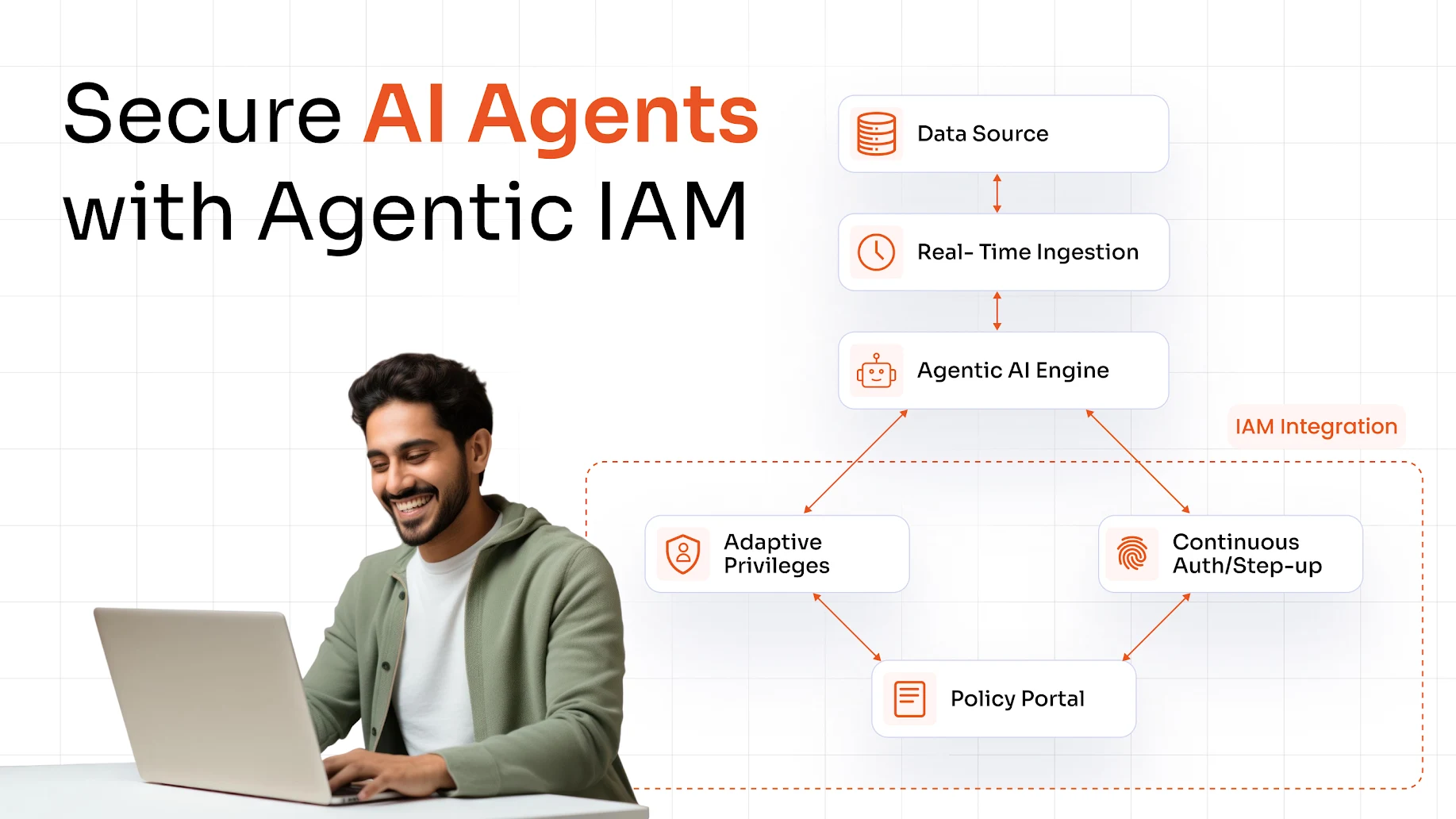
Next-Gen Authorization: RBAC vs. ABAC for Autonomous AI Agents

The rise of AI agents is changing how organizations think about authorization. Unlike human users, AI agents can interact with applications, retrieve data, execute workflows, and invoke APIs with limited human involvement.
Why AI Agents Need a Different Authorization Approach
Traditional access control models were designed around predictable human behavior. AI agents operate differently. They can access multiple systems, process large amounts of data, and perform a series of actions based on a single prompt.
Where RBAC Helps
RBAC remains important because it establishes broad access boundaries for AI agents.
Organizations can create separate roles for different AI systems, ensuring they only access the resources required for their intended function. For example, a customer service AI agent may access customer support systems but remain restricted from financial applications.
Why RBAC Alone Is Not Enough
While RBAC defines what an AI agent can generally access, it cannot evaluate the context of every action.
This becomes a concern when organizations face risks such as:
- Prompt injection attacks
- Unauthorized data access
- Excessive API activity
- Unintended workflow execution
An AI agent may have permission to access a resource, but that does not mean every request should automatically be approved.
How ABAC Strengthens AI Authorization
ABAC evaluates additional factors before allowing actions to proceed. Policies can consider:
- Data sensitivity
- User authorization level
- Session context
- Requested action
- Resource classification
AI Authorization Example with RBAC and ABAC
Consider a customer service AI agent retrieving customer records.
RBAC may allow database access, while ABAC verifies that the request relates to the active customer session and only returns data approved for that interaction.
When to Choose RBAC or ABAC
Choosing between RBAC vs ABAC depends on your organization's structure, security requirements, and the complexity of your access control needs. While both models help enforce least-privilege access, they solve different challenges.
Choose RBAC If
RBAC is the better option when users have clearly defined responsibilities and access requirements that remain relatively consistent.
RBAC works well for organizations that:
- Have stable job functions and organizational structures
- Need a straightforward way to manage user access
- Want faster implementation and lower administrative overhead
- Require consistent permissions across teams and departments
- Need to simplify onboarding, role changes, and offboarding processes
Choose ABAC If
ABAC is better suited for environments where access decisions depend on context rather than job role alone.
ABAC is often the preferred choice when organizations:
- Manage sensitive or regulated data
- Need location, device, or time-based access restrictions
- Support remote and distributed workforces
- Require fine-grained authorization controls
- Need dynamic access decisions based on changing conditions
How miniOrange Solves Advanced Authorization Challenges
As organizations scale, access requirements become more complex. miniOrange helps businesses implement flexible authorization models that balance security, usability, governance, and compliance.
Simplify Access Management with RBAC
Create role-based access policies that align permissions with business responsibilities, simplifying user onboarding, access reviews, and lifecycle management while reducing administrative complexity.
Add Context-Aware Authorization with ABAC
Enforce dynamic access controls using attributes such as user identity, device posture, location, risk level, and resource sensitivity for more precise authorization.
Support Hybrid Access Control Strategies
Combine RBAC and ABAC to establish baseline permissions while applying contextual controls, reducing role explosion, and improving authorization decisions across environments.
Secure Modern and AI-Driven Environments
Protect applications, machine identities, and AI-powered workflows with centralized authorization policies that ensure access remains aligned with security requirements.
Build a Scalable Authorization Framework
Implement a future-ready access control framework that supports cloud adoption, Zero Trust initiatives, regulatory requirements, and evolving business security needs.
Key Takeaways from the RBAC vs ABAC Comparison
The RBAC vs ABAC debate is not about finding a universal winner. Each model addresses different authorization challenges and serves different business requirements.
RBAC simplifies access management by assigning permissions through predefined roles, making it ideal for organizations with structured teams and predictable access needs. ABAC provides greater flexibility by evaluating user, resource, action, and environmental attributes in real time, enabling more granular and context-aware authorization decisions.
As organizations adopt cloud services, support distributed workforces, and deploy AI-driven systems, access requirements continue to evolve. This is why many enterprises are moving beyond the traditional ABAC vs RBAC comparison and adopting a hybrid approach that combines the strengths of both models.
FAQs
Can RBAC and ABAC be used together?
Yes. Many organizations use RBAC to assign baseline permissions and ABAC to enforce contextual controls such as location, device trust, time of access, and data sensitivity.
Is ABAC more secure than RBAC?
ABAC can provide more granular security because it evaluates multiple conditions before granting access. However, the effectiveness of either model depends on proper implementation and governance.
Can an organization migrate from RBAC to ABAC?
Yes. Many organizations gradually introduce ABAC policies alongside existing RBAC frameworks, allowing them to add contextual controls without disrupting current access management processes.
Which model is better for cloud environments?
ABAC is often better suited for cloud environments because it supports dynamic authorization decisions based on changing conditions. However, many organizations combine RBAC and ABAC for a balanced approach.
Why does RBAC lead to role explosion?
Role explosion occurs when organizations create numerous specialized roles to handle exceptions, regional requirements, or unique access scenarios. This increases administrative complexity and makes access governance more difficult.
Which access control model is best for AI agents?
A hybrid approach is typically the most effective. RBAC establishes broad access boundaries, while ABAC evaluates real-time context and risk before allowing AI agents to access sensitive resources or perform actions.

Leave a Comment