

Step into any modern enterprise today and you will notice one thing immediately. Work is no longer tied to a desk.
Employees are working from smartphones, tablets, rugged devices, kiosks, POS systems, and even digital signage screens. In most cases, these devices are powered by Android because of its flexibility and cost-effectiveness.
Now imagine managing not just a handful but hundreds or even thousands of such devices across teams, locations, and use cases.
Without a structured approach, things can quickly become difficult to manage. Devices may get misconfigured, unauthorized apps can be installed, security gaps may go unnoticed, and IT teams can lose visibility and control.
In many situations, it only takes one unmanaged device to create a serious security issue.
This is where Android device management becomes essential. It gives organizations a way to stay in control, secure their data, and ensure that devices are used exactly as intended without adding operational complexity.
In this blog, we will discuss Android device management, its features, and its benefits.
What is Android Device Management?
Android device management is the process of monitoring, controlling, and securing Android devices used within an organization through a centralized platform. Instead of handling devices individually, IT teams can remotely configure settings, enforce policies, deploy applications, and track usage from a single dashboard.
Think of it as a control center for all your Android devices. Whether the devices are used by employees, customers, or field teams, Android device management ensures they are:
- Properly configured
- Secure from threats
- Used only for intended purposes
- Always connected and functional
It eliminates the need for manual intervention and brings consistency across the entire device ecosystem, which enhances operational efficiency and reduces the risk of errors in device management.
What is Android Device Management Used For?
Businesses use Android MDM solution to establish structure, security, and efficiency in device usage.
At a basic level, it helps IT teams manage devices remotely. But in practice, it plays a much bigger role in day-to-day operations.
For example, when a new employee joins, their device can be pre-configured with all required apps and settings before they even turn it on. This removes the need for manual setup and speeds up onboarding.
In customer-facing scenarios like retail stores or self-service kiosks, devices can be locked to specific apps to ensure they are used only for business purposes.
In logistics or delivery operations, devices can be tracked in real time to ensure they are being used in the right locations.
Android device management is also widely used to:
- Enforce security policies across all devices
- Prevent installation of unauthorized apps
- Monitor device health and usage
- Provide remote troubleshooting and support
- Ensure compliance with company policies
In short, it turns unmanaged devices into controlled, business-ready tools.
Types of Android Device Management
Different organizations have different ways of using devices. Some provide devices to employees, while others allow personal devices for work.
To support these variations, Android device management offers different deployment models.
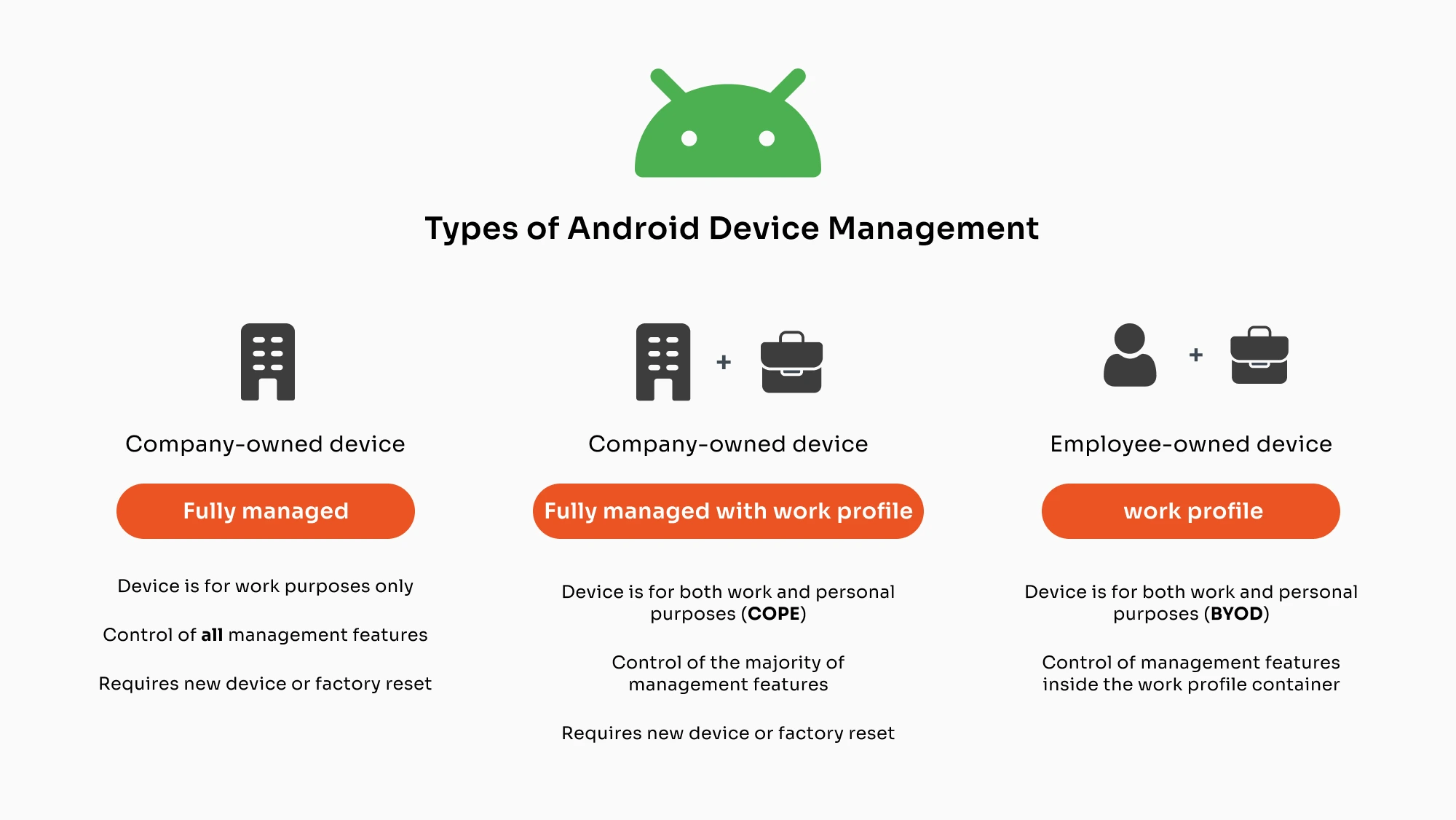
1. Company-Owned, Business Only (COBO)
In this model, devices are fully owned by the organization and are strictly used for work. There is no scope for personal use. IT teams have complete control over every aspect of the device, including apps, settings, and access.
This model is commonly used in environments where devices serve a specific purpose, such as kiosks, POS systems, or field devices.
Why it works well: It provides maximum control and security, with minimal risk of misuse.
2. Company-Owned, Personally Enabled (COPE)
COPE offers a balance between control and flexibility. Devices are owned by the organization but allow limited personal use. Work data and personal data are separated, ensuring that business information remains secure.
Employees get the convenience of using a single device, while IT teams retain control over work-related activities.
Why it works well: It improves employee experience without compromising security.
3. Bring Your Own Device (BYOD)
In this model, employees use their personal devices for work. Instead of controlling the entire device, organizations manage only the work-related apps and data using BYOD management software.
This approach is common in remote and hybrid work setups, where flexibility is important.
Why it works well: It reduces hardware costs while still maintaining control over business data.
Why is Android Device Management Essential for Businesses?
As businesses grow, the number of devices increases across teams, locations, and use cases. Managing these devices manually not only becomes time-consuming but also introduces risks such as misconfigurations, security gaps, and lack of visibility.
Android device management addresses these challenges by bringing centralized control, consistency, and real-time oversight across all devices. Here are the key reasons why Android device management is essential for businesses:
- Visibility: Without a proper management system, IT teams often lack clarity on which devices are active, where they are located, and how they are being used. Android device management provides a centralized dashboard that gives real-time visibility into device status, usage, and compliance. This makes it easier to monitor operations, identify issues early, and maintain better control across the entire device fleet.
- Security: Android devices frequently handle sensitive business data, making them potential targets for cyber threats. With Android device management, organizations can enforce security policies such as screen locks, data restrictions, and controlled app usage. In case of device loss or theft, features like remote lock and wipe ensure that business data remains protected.
- Productivity: When devices are not properly configured, employees often spend time setting up apps or dealing with unnecessary distractions. Android device management ensures that devices are pre-configured with the right apps and settings before they are used. It also helps restrict non-work-related usage, allowing employees to stay focused and perform their tasks more efficiently.
- Compliance: Many industries require strict adherence to data protection and usage policies. Android device management helps organizations enforce these policies consistently across all devices. It also provides reporting and monitoring capabilities that make it easier to demonstrate compliance during audits.
- Cost-efficiency: Managing devices manually requires significant time, effort, and resources, especially as the organization scales. With remote device management capabilities, IT teams can configure, update, and troubleshoot devices without physical intervention. This reduces operational overhead, minimizes downtime, and helps organizations optimize their overall device management costs.
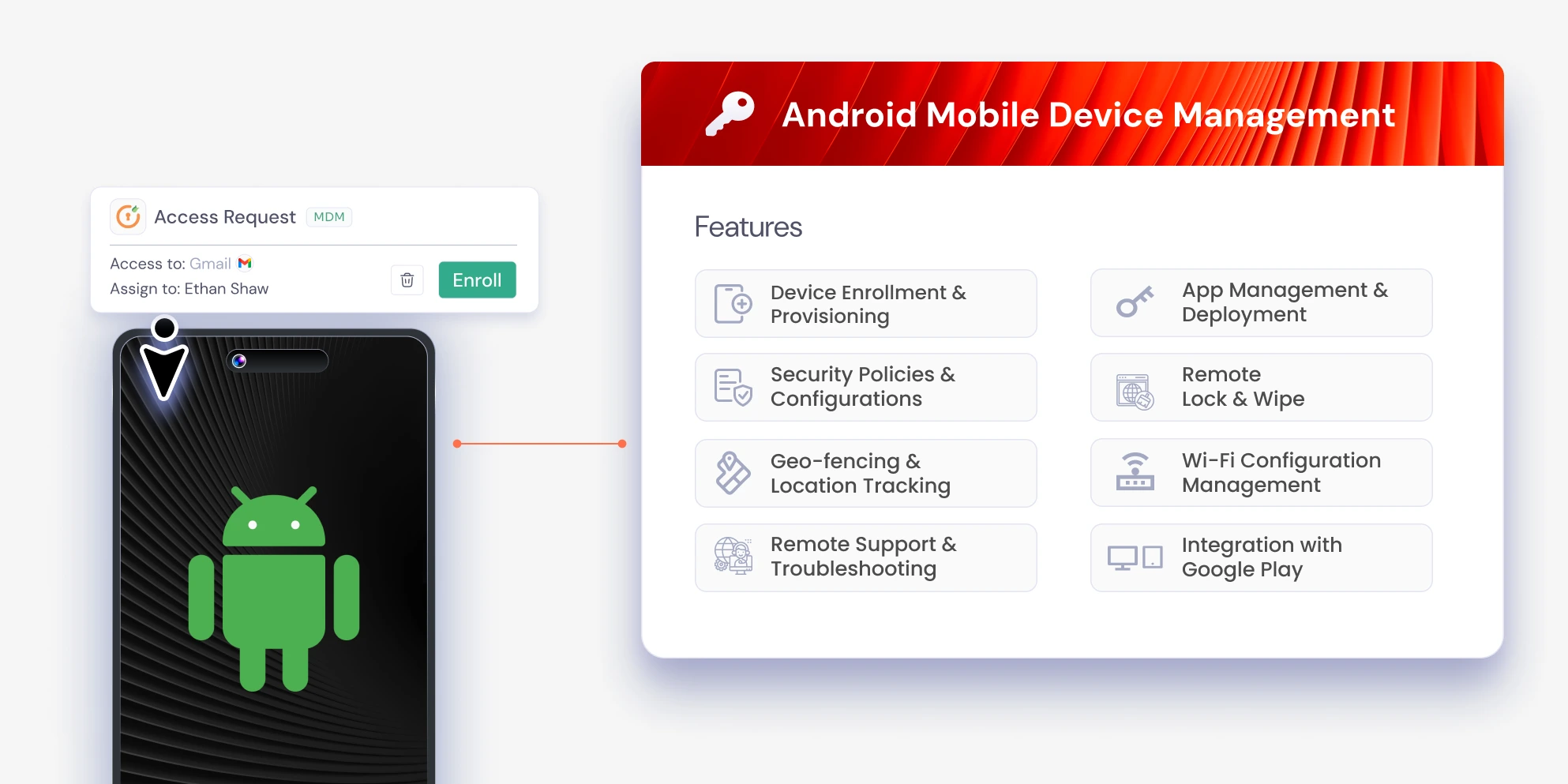
Key Features of Android Device Management
1. Device Enrollment & Provisioning
Setting up devices manually can be time-consuming, especially at scale. With automated enrollment methods like QR codes, zero-touch, or out-of-the-box provisioning, devices can be configured and ready to use from the moment they are powered on. This significantly reduces setup time and ensures consistency across all devices.
2. App Management & Deployment
Managing applications across multiple devices becomes simple with centralized control. IT teams can remotely install, update, or remove apps, ensuring that only approved and secure applications are used. This also helps prevent unauthorized app usage and keeps devices aligned with business needs.
3. Security Policies & Configurations
Android device management allows organizations to enforce strict security controls across all devices. Features like restricting screenshots, blocking USB access, enforcing screen locks, and controlling data sharing help protect sensitive information and reduce the risk of data leakage.
4. Remote Lock & Wipe
Devices can sometimes be lost, stolen, or misplaced. In such cases, IT teams can remotely lock the device or completely wipe its data to prevent unauthorized access. This ensures that business data remains secure even when the device is no longer in safe hands.
5. Location Tracking
For businesses that rely on field devices, knowing where the devices are at any given time is critical. Location tracking allows organizations to monitor devices in real time and define boundaries. If a device moves outside a predefined area, alerts can be triggered for immediate action.
6. Detailed Reporting
Having visibility into device performance and usage is essential for effective management. Detailed reports provide insights into device health, app usage, and compliance status, helping IT teams identify issues early and make informed decisions.
7. Remote Support & Troubleshooting
When devices face issues, waiting for physical access can delay operations. With remote troubleshooting, IT teams can access devices, diagnose problems, and resolve them instantly. This minimizes downtime and ensures employees can continue working without interruptions.
8. Integration with Google Play
Managing apps through Google Play integration makes deployment secure and efficient. IT teams can control which apps are available, push updates, and ensure devices always have access to the latest versions of business-critical applications.
9. Wi-Fi Configuration Management
Connecting devices to secure networks can be automated. IT teams can pre-configure Wi-Fi settings and deploy them across devices, ensuring seamless connectivity without requiring manual input from users.
10. Time-Based Restrictions
In certain use cases, it is crucial to control the timing of device usage. Time-based policies allow organizations to restrict app usage or device functionality during specific hours, helping improve productivity and reduce misuse.
11. Remote OS Updates
Keeping devices updated is critical for both performance and security. With remote OS update management, IT teams can schedule updates, enforce them when required, or delay them for testing, ensuring devices remain stable and secure.
12. Kiosk Mode (Single-App & Multi-App Lockdown)
Kiosk mode allows devices to be restricted to a single app or a set of approved apps. This ensures that devices are used only for their intended purpose, preventing users from accessing system settings or installing unauthorized applications.
Benefits of Using Android Device Management
Android device management is not just about controlling devices. It plays a key role in improving how organizations manage operations, maintain security, and support their workforce at scale. Here are some of the key benefits of using Android device management:
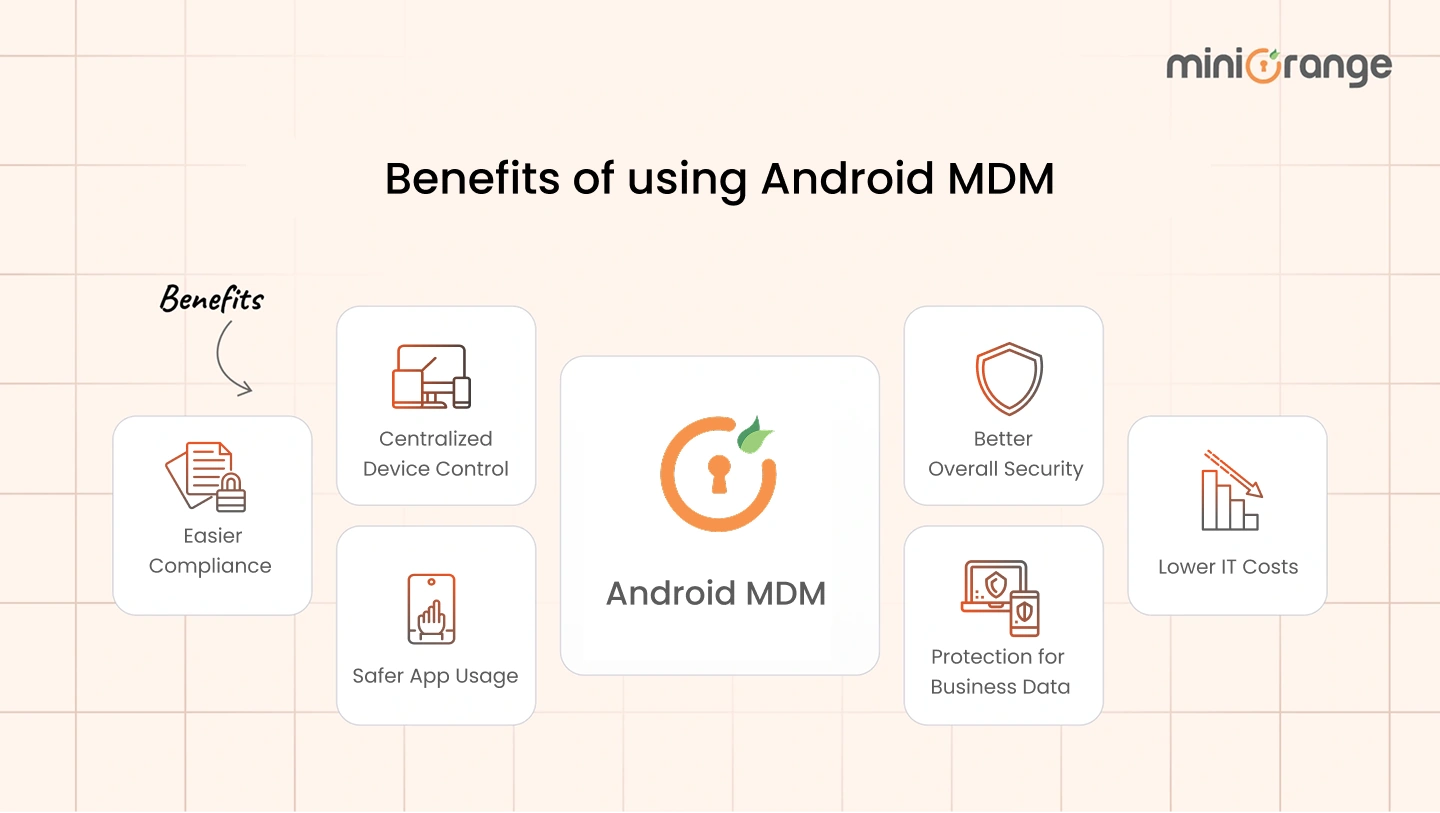
- Centralized Control: Managing devices individually can quickly become complex as the number of devices grows. With a centralized dashboard, IT teams can monitor, configure, and manage all devices from a single place. This simplifies operations and ensures consistency across the entire device fleet.
- Enhanced Security: Android devices often carry sensitive business data, making them potential targets for threats. With features like encryption, security policies, and remote wipe or lock, organizations can protect data at every level and respond quickly if a device is compromised.
- Increased Efficiency: Manual device setup and maintenance can slow down operations. Android device management automates tasks like device provisioning and app deployment, reducing the workload on IT teams and allowing employees to start working without delays.
- Customizable Policies: Different teams and roles often require different levels of access and control. Organizations can create and apply policies based on specific requirements through Android device management, ensuring appropriate configuration for each device and its user.
- Remote Troubleshooting: Device issues can disrupt workflows, particularly in distributed teams. With remote troubleshooting, IT teams can access devices, identify problems, and resolve them without needing physical access, saving time and minimizing downtime.
Simplify Android Device Management with miniOrange MDM
Android device management has become essential for modern businesses. As organizations rely more on mobile devices, the need to secure, monitor, and manage them efficiently continues to grow.
Managing devices is not just about control. It's about maintaining security, improving productivity, and reducing operational effort at scale. This is where a reliable mobile device management solution makes a difference.
miniOrange offers a centralized and flexible approach to managing Android devices. It covers all core capabilities while also supporting organizations with large or diverse Android deployments.
Here's how miniOrange simplifies Android device management:
- Centralized Management: The web-based dashboard provides complete visibility and control over all devices. IT teams can configure settings, deploy apps, and enforce policies from a single console.
- Simplified and Versatile Onboarding: Devices can be enrolled using QR code, out-of-the-box setup, or zero-touch methods. This reduces manual effort and speeds up deployment.
- Improved Security: Organizations can enforce policies, enable encryption, and remotely lock or wipe devices. This ensures business data remains protected at all times.
- Enhanced Productivity: Devices can be pre-configured with the right apps and settings, allowing employees to start working immediately without delays.
- Customizable Policies: Policies can be defined based on roles, departments, or device types, ensuring each device is configured appropriately.
- Real-time Monitoring and Reporting: Device analytics provides insights into device performance, compliance, and security, helping teams take proactive action.
- Remote Troubleshooting: IT teams can remotely access devices to resolve issues quickly, reducing downtime and support costs.
- Shared Android Device Management: Supports group-based device access, ensuring each user gets the right apps and settings on shared devices.
- Reliable Technical Support: Dedicated support helps ensure smooth implementation and ongoing device management.
miniOrange MDM helps organizations simplify Android device management while improving efficiency and maintaining complete control.
FAQs
1. What is Android Enterprise?
Android Enterprise is a set of tools and APIs by Google that help organizations securely manage Android devices. It supports features like work profiles, fully managed devices, and app control for business use.
2. What is the difference between Mobile Device Management (MDM) and Enterprise Mobility Management (EMM)?
MDM focuses mainly on managing and securing devices, while EMM goes a step further by managing apps, content, and user access. In simple terms, EMM includes MDM but offers a broader approach to mobility management.
3. How to enroll corporate Android devices?
Corporate Android devices can be enrolled using methods like QR code enrollment, zero-touch provisioning, or out-of-the-box setup. These methods allow IT teams to quickly configure devices with required apps and policies.
4. What is a fully managed device?
A fully managed device is an Android device owned and controlled entirely by the organization. IT teams have complete control over apps, settings, password policies, and usage, making it ideal for business-only use cases.
5. How to choose the right Android MDM solution?
The right Android MDM solution should offer easy device enrollment, strong security controls, app management, remote troubleshooting, and scalability. It should also support your business use cases and integrate well with your existing systems.
Additional Resources
- Device Management with miniOrange Android MDM
- How to enroll Android devices into miniOrange MDM
- Unified Endpoint Management (UEM) Platforms by miniOrange
- How to Prevent Factory Reset on Android Work Devices?
- Mobile Device Management (MDM) solutions
- Top 10 Benefits of Mobile Device Management (MDM) for Businesses
Leave a Comment