
Data Loss Prevention (DLP), sometimes called data leakage protection, is a tool and process, and a broader security discipline designed to detect, prevent, and manage the unauthorized access, transmission, or leakage of sensitive information by stopping it from being accessed, shared, or moved without authorization.
In practical terms, DLP helps organizations keep control of critical data such as personally identifiable information (PII), financial records, credentials, Intellectual Property (IP), and other sensitive data. Whether the risk comes from an employee mistake, a malicious insider, or an external attacker, DLP ensures that sensitive data does not leave the organization unintentionally. In short, any data that an organization would not want publicly exposed or accessed without proper authorization qualifies as critical data and should fall under DLP protection.
A modern data loss prevention system gives security teams visibility into how data is used, applies policy-based controls, and reduces the likelihood of costly data breaches across endpoints, networks, and cloud environments
DLP Meaning and Definition
DLP refers to a cybersecurity approach that protects sensitive data throughout its entire lifecycle when it is stored, accessed, or shared.
DLP solutions work by identifying confidential data, applying security rules, and responding automatically when those rules are violated. Depending on the policy, the system may block the action, generate an alert, or log the event for investigation.
Why Is Data Loss Prevention Important?
As organizations move to cloud platforms, support remote and hybrid workforces, and depend on third-party applications, sensitive data is accessed and shared across more locations than ever before. This expanded data footprint significantly increases the risk of data exposure, leakage, and misuse, making DLP a critical component of modern security strategies.
DLP helps by:
- Preventing unauthorized movement of sensitive and regulated data
- Reducing risks from insider threats and human errors
- Protecting intellectual property and confidential business information
- Supporting compliance with GDPR, HIPAA, PCI-DSS, and ISO 27001
- Reducing financial losses and reputational damage from breaches
Without DLP, organizations often lack visibility into where sensitive data exists and how it is shared.
Why Businesses Should Enable DLP
Most data loss incidents occur due to everyday business activity combined with limited controls.
Organizations deploy DLP to protect against:
1. Insider Threats
Employees or partners may intentionally or unintentionally misuse sensitive data.
2. Accidental Data Leaks
Mistakes like sending files to the wrong email or uploading data to unsanctioned apps are common causes of breaches.
3. Malware and Ransomware
Attackers attempt to steal or exfiltrate sensitive data during cyberattacks.
A centralized solution like miniOrange DLP helps detect and stop these risks early.
Types of Data Threats
Common causes of data leakage include:
- Insider misuse or excessive permissions
- Human error and misconfigurations
- Phishing and credential compromise
- Malware and ransomware attacks
- Unsecured endpoints and unmanaged devices
DLP solutions mitigate these risks by continuously monitoring data activity and enforcing security policies in real time.
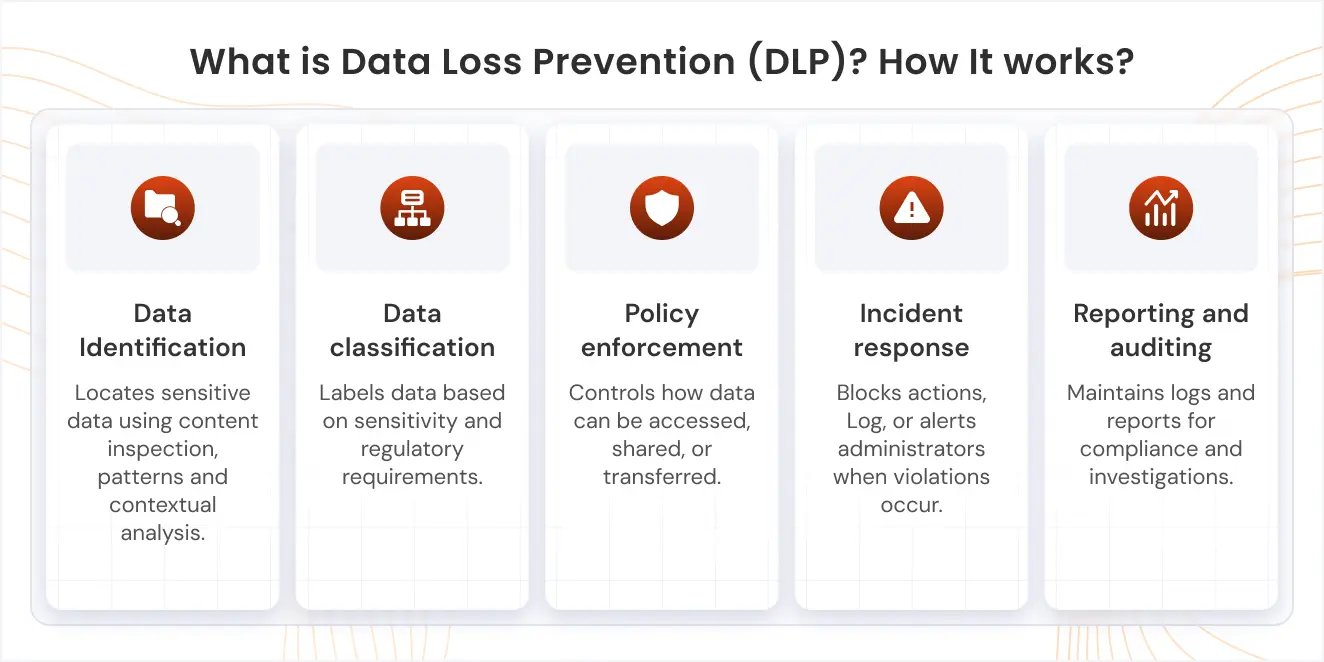
How Does DLP Work?
A Data Loss Prevention solution combines multiple security functions to protect sensitive data consistently.
Typical workflow:
- Data Identification – Finds sensitive data using pattern and content inspection
- Data Classification – Labels data based on sensitivity
- Policy Enforcement – Controls sharing, transfer, and access
- Incident Response – Blocks or alerts on violations
- Reporting & Auditing – Maintains logs for compliance and investigation
This layered approach protects data without disrupting business operations.
Types of DLP Solutions
Different environments require different DLP controls.
1. Network DLP
Monitors data moving across the network and prevents unauthorized transfers through email, web uploads, or file sharing.
2. Endpoint DLP
Endpoint DLP protects laptops and devices by controlling USB usage, file copying, screenshots, and local transfers.
3. Cloud DLP
Secures data stored in cloud platforms and SaaS applications by preventing unauthorized sharing. miniOrange DLP protects data across all environments through a centralized interface.
Best Practices for DLP Implementation
An effective DLP strategy combines technology and user awareness:
- Discover and classify sensitive data first
- Start with monitoring-only policies
- Apply least-privilege access
- Keep policies consistent across cloud and endpoints
- Train employees on secure data handling
- Regularly review alerts and policies
When properly implemented, DLP improves security without impacting productivity.
Trends in Data Loss Prevention
Modern DLP solutions continue to evolve with security architecture:
- AI-driven classification and risk detection
- Integration with Zero Trust security
- Cloud-native protection for SaaS environments
- User behavior analytics (UBA)
- Unified platforms combining DLP, MDM, and CASB capabilities
miniOrange integrates DLP with identity and access management for context-aware protection.
Why Choose miniOrange DLP?
miniOrange Data Loss Prevention enables organizations to monitor, control, and protect sensitive data in real time. With centralized policy management and seamless integration across endpoints, networks, and cloud environments, miniOrange helps businesses maintain visibility, ensure compliance, and keep critical data secure.
FAQs
1. What Is Data Loss Prevention in Cybersecurity?
Technologies and policies that prevent sensitive data from being accessed or shared without authorization.
2. What Is the Purpose of DLP?
To protect critical business data, support compliance, and reduce breach risks.
3. Why Do Companies Need DLP?
To secure confidential information, protect intellectual property, and maintain customer trust.
4. What Are the Components of DLP?
Data discovery, classification, monitoring, policy enforcement, incident response, and reporting.
5. What Is an Example of DLP?
Blocking an employee from copying customer data to a USB drive or uploading it to personal cloud storage.
Leave a Comment